She provided a summary of her political opinions as though reciting a script she’d repeated many times, revealing one personal detail that interested me more.
I was familiar with these views in these parts, having heard them from the lips of women of a similar vintage and class. She believes in open borders (“Welcome, one and all”). She loathes America, Israel and Brexit. She wants higher taxes to support the Ukrainian people in resisting Putin’s aggression.
Her voice was raised during the last point, causing the few heads present to look our way. We were at one of the numerous hubs in Somerset set up for Ukrainian refugees by CHARIS (Christian Help and Action for Refugees in Somerset), in collaboration with local councils.
These venues now embrace all immigrants, refugees, and asylum seekers who welcome the weekly gathering at a former primary school, where information on housing and welfare benefits is available, along with free English lessons, tea, instant coffee, home-made cakes, and puzzles. Wells, the smallest city in England, seems an unlikely destination for such a venture, as it’s dominated by an older, white, British middle class, of which this particular “Lady Bountiful” is one.
I’ll use this term to describe her here rather than her real name. Suffice it to say, she has one of those rare surnames that look nothing like they sound, given to characters in comical English novels to summarise poshness and pedigree.
“I moved to the west country from London a decade ago,” I said, since she asked. She arrived in 1977, buying a town house with her late husband minutes from the cathedral. She was in her eighties, she said. This too was a pronouncement, but no head turned. It was her way of declaring that, despite the walking frame, she was as sprightly of mind, as feisty in thought, as in 1977.
No, even further back: as a child at a boarding school in one of the shires, where she had been dispatched by her vicar father. He remained with her mother in the family home in Kensington, tending his flock at the parish church.
Her father had instilled in her a righteous approach to the poor and needy, particularly the foreign poor and needy. On this, he would utter memorable statements so pertinent that she carries them with her to this day.
She listed the various arrivals she’d assisted over the years, providing food parcels, clothes, and information: West Indians in the 1960s, Ugandan Asians in the 1970s, and, in recent decades, the world and his wife. She fought hard for permanent encampments for travellers, taking on local authorities and residents when objections were raised. She was a regular at the hub — a veteran bringing her expertise to the volunteers present. I didn’t ascertain what official capacity she served in to warrant this status. A fundraising role? A job at the Citizen’s Advice Bureau?
According to the 2021 Census, the local population of 11,145 was one of the least ethnically diverse in England, with Caucasians making up 95 per cent. There was a wealthy Chinese contingent at the private school. There were European migrants, settled before Brexit. But this relatively stable population is changing: firstly because of the war in Ukraine; more recently due to asylum dispersal placements and a raft of new housebuilding on the outskirts of town. In an answer to Lady Bountiful’s prayers, it is time to welcome one and all.
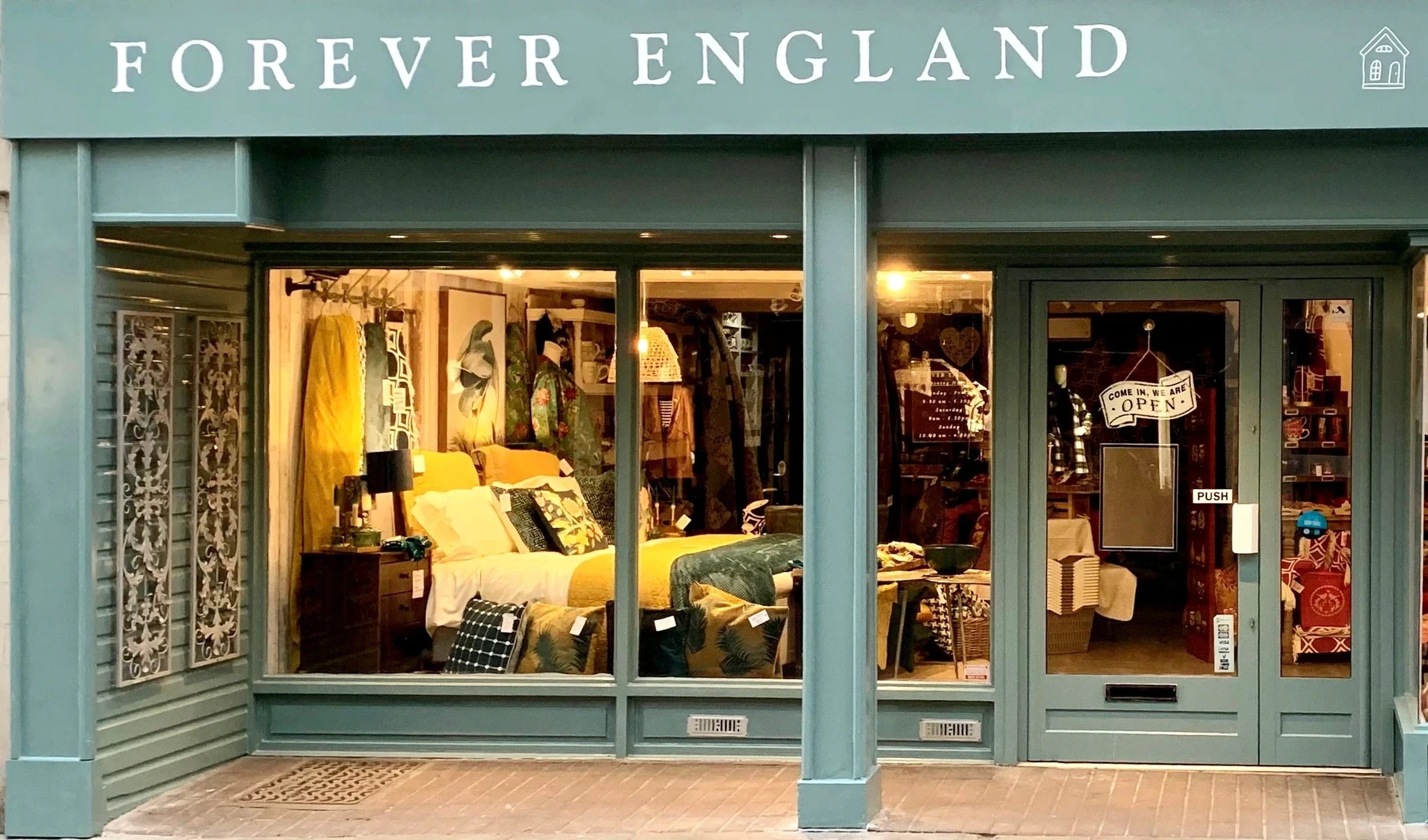
Occasionally, gangly Somalian men are spotted at the local library, swamped by an outized hoodie and stationed at the photocopier. African women and their children promenade the high street early in the morning, some of them possibly filling carer roles for the elderly, or filling shelves at Waitrose. The high street has the obligatory Turkish barber and Vietnamese nail bar. Kurdish cafes are peppered between coffee shops, charity shops, White Stuff, Seasalt, and a long-established store displaying bed linen, entitled Forever England.
“The young man in the corner is from Eritrea,” Lady Bountiful informed me on the day I attended the refugee hub, by way of a field study. “He doesn’t speak English. The people sitting with him are employed by the council.” During the two hours I spent in the former infants’ dining hall, these helpers, distinguished by their lanyards, engaged little with their charge. One spent the time flicking through dog-eared copies of Grazia.
The female volunteers present were of pensionable age, therefore younger than Lady Bountiful, who kept a beady eye on them. In style and manner, they were interchangeable with the elders blocking roads for Just Stop Oil. They could be, and possibly were, among the women banging pots and pans in Wells market square one Saturday morning a month, accompanied by a sandwich board calling for sanctions against Israel.
Two of them, former teachers, returned to Wells as conquering heroes following their arrest at a rally in support of Palestine Action in Cardiff. Their adventurous day out became a major story in a minor local newspaper, an outlet that’s become increasingly politicised, sandwiching references to “genocide” between reports on overgrown hedges and a dog that smiles.
These women have the silver, shingled hair of Colette, or the style adopted by Mary Beard circa 1968 — doubtless the year they settled on the outlook and the outfit that accompanied them through the years. (The pot-bangers opt for shapeless Seasalt tops in shades of burgundy.) Meanwhile, the world changed, but their politics and attire didn’t.
I’d suggest an anger colonised their young, impressive minds over the Vietnam War and Bob Dylan going electric, which went into abeyance when they were bringing up baby and buying second homes. With the children grown up, mortgages paid, they are once again street-fighting women.
The causes they rally for range from conflict in the Middle East to the prospect of a phone mast adjacent to Budgens garage. In my early years here, there were rumours of unrest when Morrisons arrived on the Mendips, threatening to become a yellow blot on an evergreen landscape of tors and spires.
Politically, these ladies lean to Labour and the Greens, but are content to put their weight behind the local Lib Dem MP. Lady Bountiful backs them, she confided, because the Labour Party has few prospects in these parts. I was keen to know why someone so affiliated with the left, so keen on multiculturalism, moved here almost 50 years ago. Wasn’t the parochial city of Wells the antithesis of everything she held dear in 1977 and ever after?
Her husband’s work brought them to this county when she was a mother with a young child. Big properties at cheaper prices, prestigious schools, drew the family to Wells. “I couldn’t let my son go to school in Yeovil,” she told me, using the same mocking tone as when I mentioned the support for Reform in the west country.
Her reasons were those of a similar breed making the exodus from London this century: many of them professional men able to be itinerant with their work, with wives who became ladies who lunch, teachers, and artists. In conversation, a number of them lament the absence of London’s “diversity”.
For the London natives among us, the last of generations born and raised in poor postcodes on the wrong side of the Thames, the capital’s decline and the change in demographic prompted the voyage out — those of us who attended the schools the likes of Lady Bountiful’s son never attended, on the streets he never had to walk. I alluded to this point, causing her ladyship to tire of my company.
I believe she mentioned in passing, sotto voce, that her son had died. If so, it wasn’t said for sympathy or to distract, and she didn’t elaborate as to when or how. I got the impression it was in recent years, as he left a son old enough to become a documentary-maker focusing on films on environmentalism.
This personal detail was of more interest than her political opinions and her performative way of announcing them. If I heard correctly, her son’s death was mentioned as a thought she didn’t mean to express, but one that was with her always: a mother forever mourning the loss of a child who went before her, before his time.
As I was about to make my excuses and leave, I attempted to lighten the mood by raising a point that once again caused heads to turn our way. “You seem to have lived in places far removed from those poorer urban areas impacted by mass immigration and permanent travellers’ camps,” I told Lady Bountiful, adding that I spoke “as someone raised in a south London neighbourhood that accommodated the former from the 1960s onwards, and the latter in the 1980s”.
Silence fell. Even the young Eritrean sensed something was amiss, as his minders turned our way. The diminutive woman below me straightened her back. Her eagle-like shoulders narrowed; her fleece fell like a skin being shed. The scrutinising look moved to disapproving as she raised herself up on her frame as though it were a despatch box, or her father’s pulpit. Addressing me, but informing the room, she declared: “I have always lived among immigrants. I have two Ukrainian refugees staying with me at the moment.”
For Lady Bountiful and her cohorts of a similar pedigree and political persuasion, mass immigration continues to summon thoughts of curries, carnivals, and exotic creatures forever cast as victims. It means a wider variety of dishes at the annual food festival, during which Sikhs have appeared on the cathedral green, serving meals and offering tutorials on how to tie a turban.
A recent exhibition at the cathedral, A Celebration of Demonstration, displayed photographs taken during the Black Lives Matter rampages in 2020 — the season the Dean and Chapter of Bath and Wells, along with several bishops, silently took the knee in the nave of Wells Cathedral, while riots brought carnage to Westminster.
Ultimately, these provincial figures elevate the other sort of provincial figures, the migrants, by overlooking all potential flaws, and by denigrating natives who raise concerns about mass immigration. Naively, Lady Bountiful, the pot-bangers, and the Somerset clergy see only the good in newcomers from foreign climes, never the prospect of the bad and the ugly. This might be about to change, along with their idyllic little city
This article first appeared in The Critic