
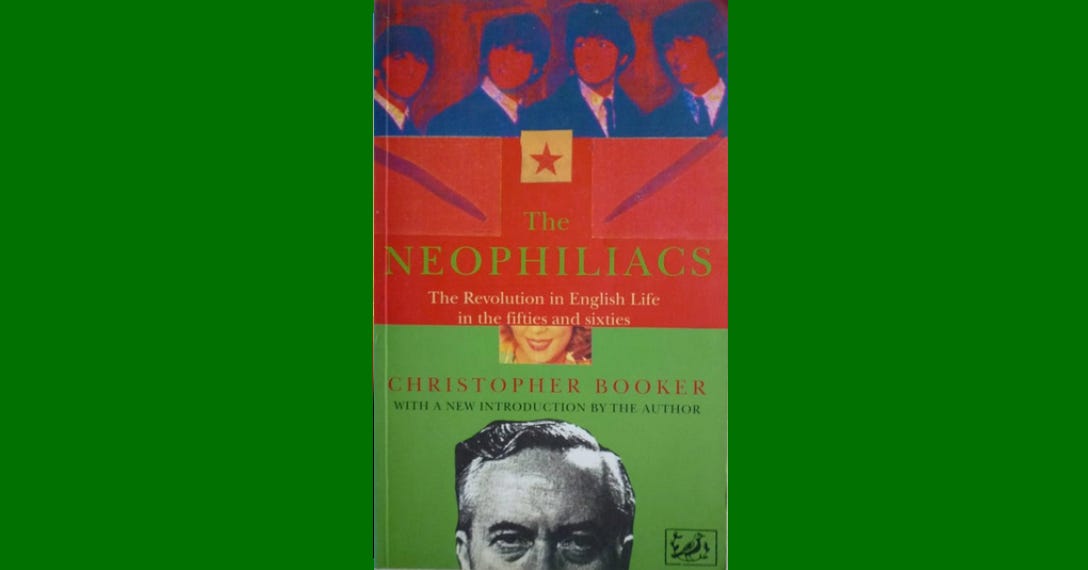
By the time the veteran journalist Christopher Booker died in 2019, he had witnessed enough of the twenty-first century to notice how much his book on the 1960s (The Neophiliacs, published in 1969) resonated with it.
Two years into this decade, it’s become apparent to others, too, that there are striking parallels between the themes highlighted in his critique of the 1960s and social trends that test us in the present.
“In order to become mature, in short, we must not only reject the authority of our parents — but, at the same time, in order to replace them, we must also learn to kill off our own fantasy selves”, Booker, in Jungian mode, wrote. “Only by killing this fantasy self can a man become fully mature. Unless he does so, he is still in a state of rebellion, a perpetual state of immaturity.”
He was referring to the reputed revolution that occurred in the 1960s (which he dated to beginning in 1954). It was a conflict between the young and the old; the past and the present. It was at…